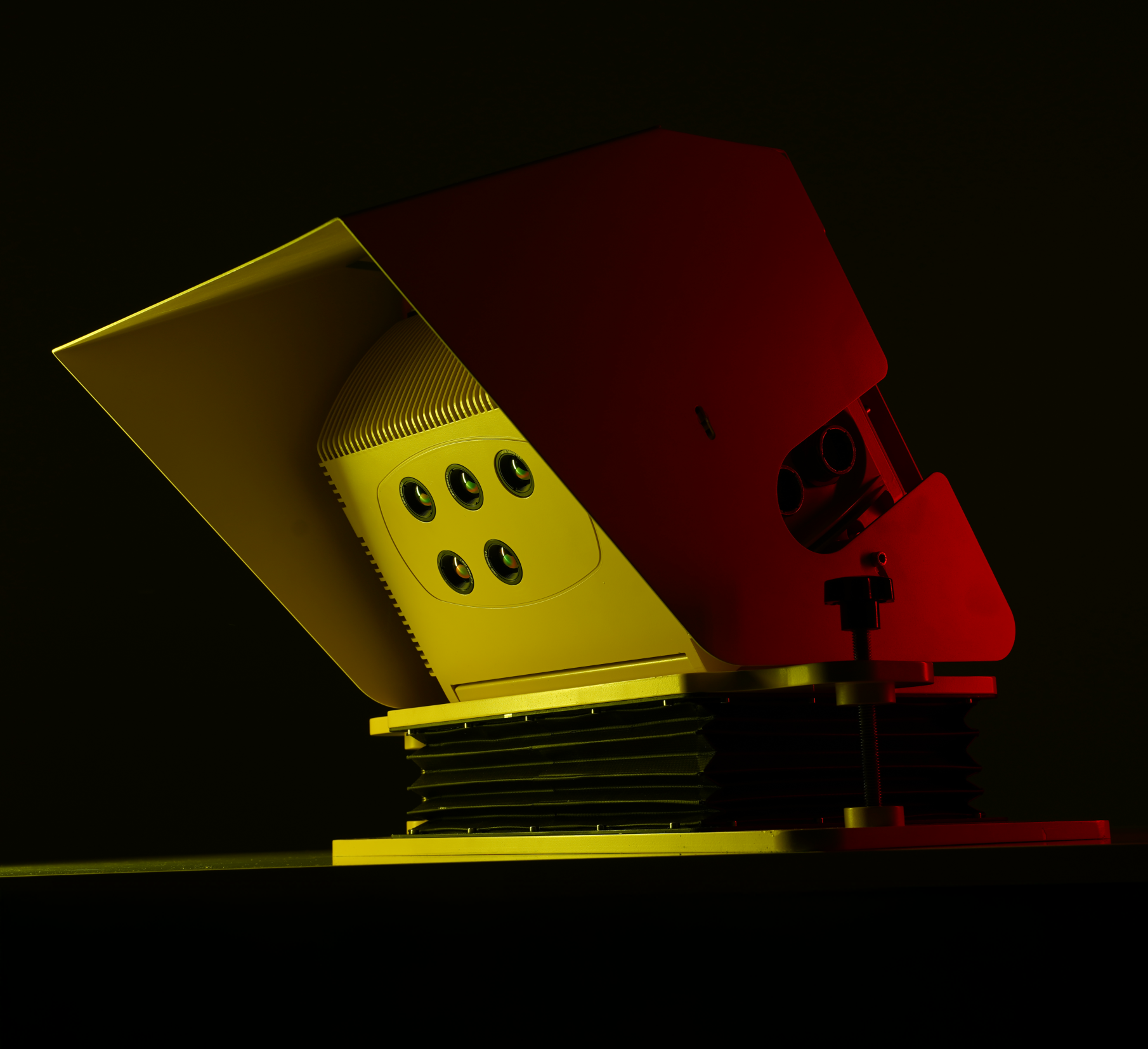
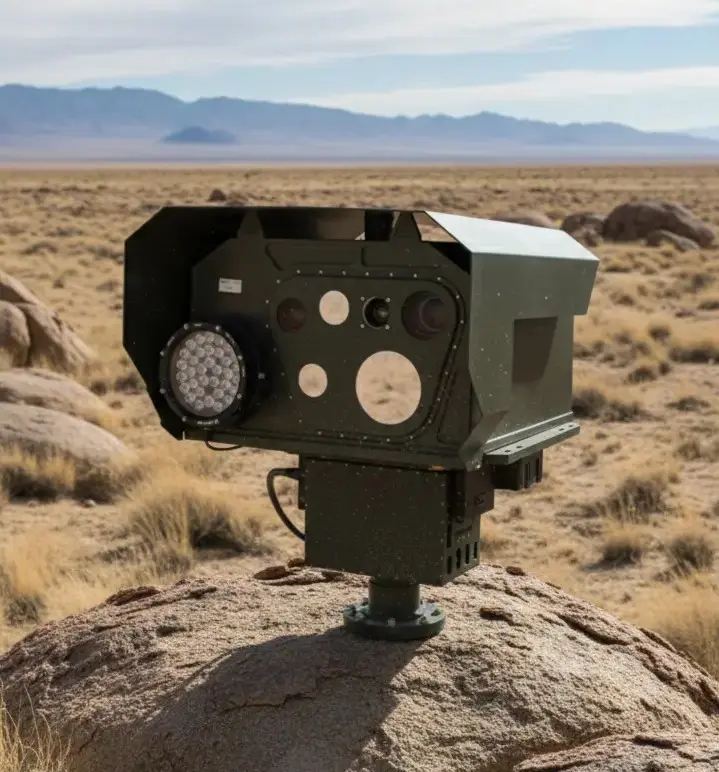
"134 spectral bands. Every surface has a signature. SPECTRA reads it."
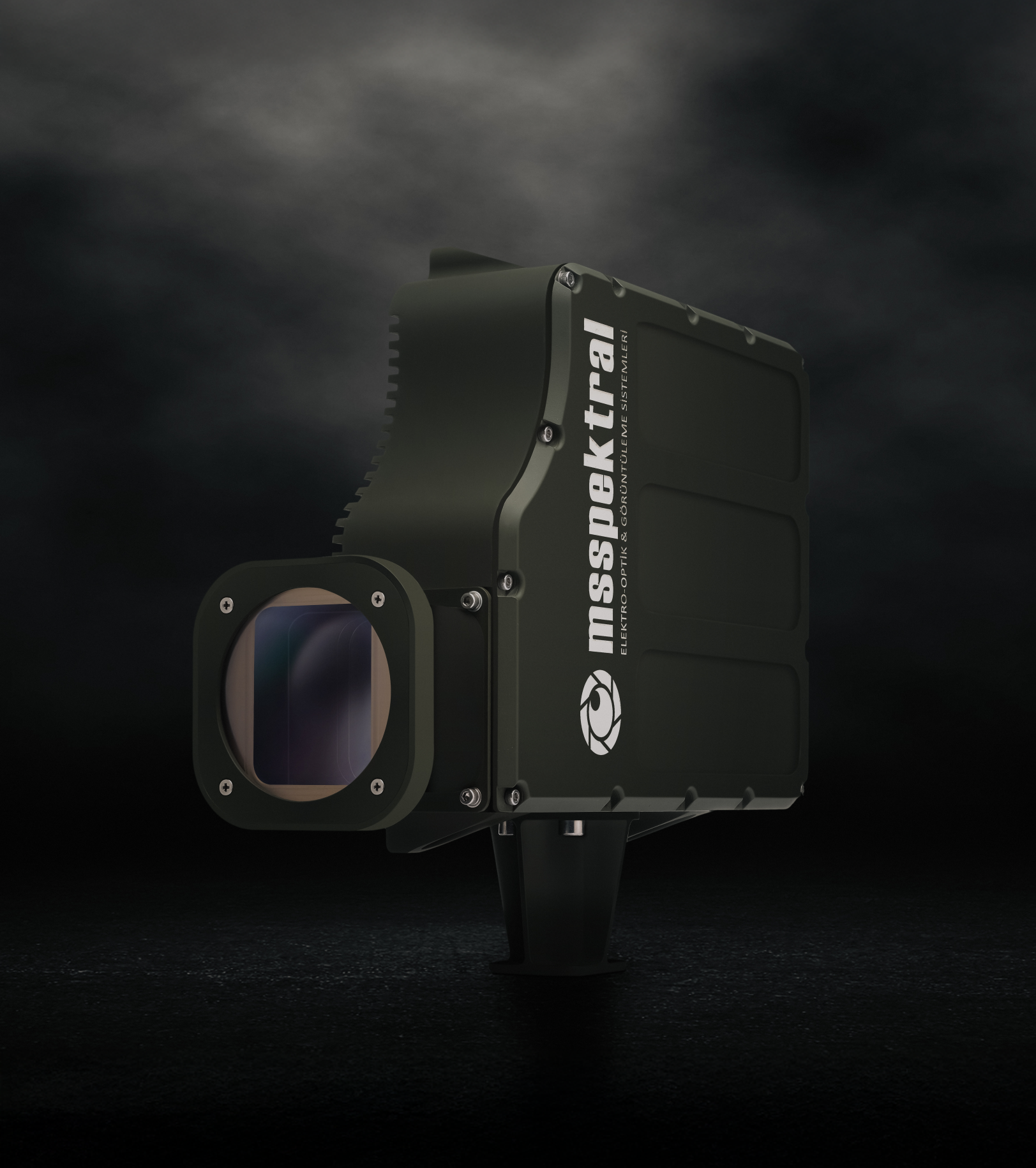
SPECTRA is a 134-band linear push-broom hyperspectral imaging system engineered specifically for integration into armoured vehicles and demanding field environments. Where conventional electro-optic cameras detect reflected light intensity — producing an image the human eye can interpret — SPECTRA captures the full spectral signature of every surface across 134 contiguous wavelength bands simultaneously. This is the difference between seeing a scene and reading its material composition.
The operational consequence is decisive. Camouflage nets, foliage and concealment materials are designed to fool the human eye and standard RGB or NIR cameras by mimicking the visual appearance of their surroundings. They cannot replicate the spectral fingerprint of natural vegetation or terrain across 134 bands. SPECTRA exposes the difference — revealing what was engineered to stay hidden. Defence agencies and research organisations worldwide recognise hyperspectral imaging as one of the few technologies that consistently defeats modern camouflage at operational ranges.
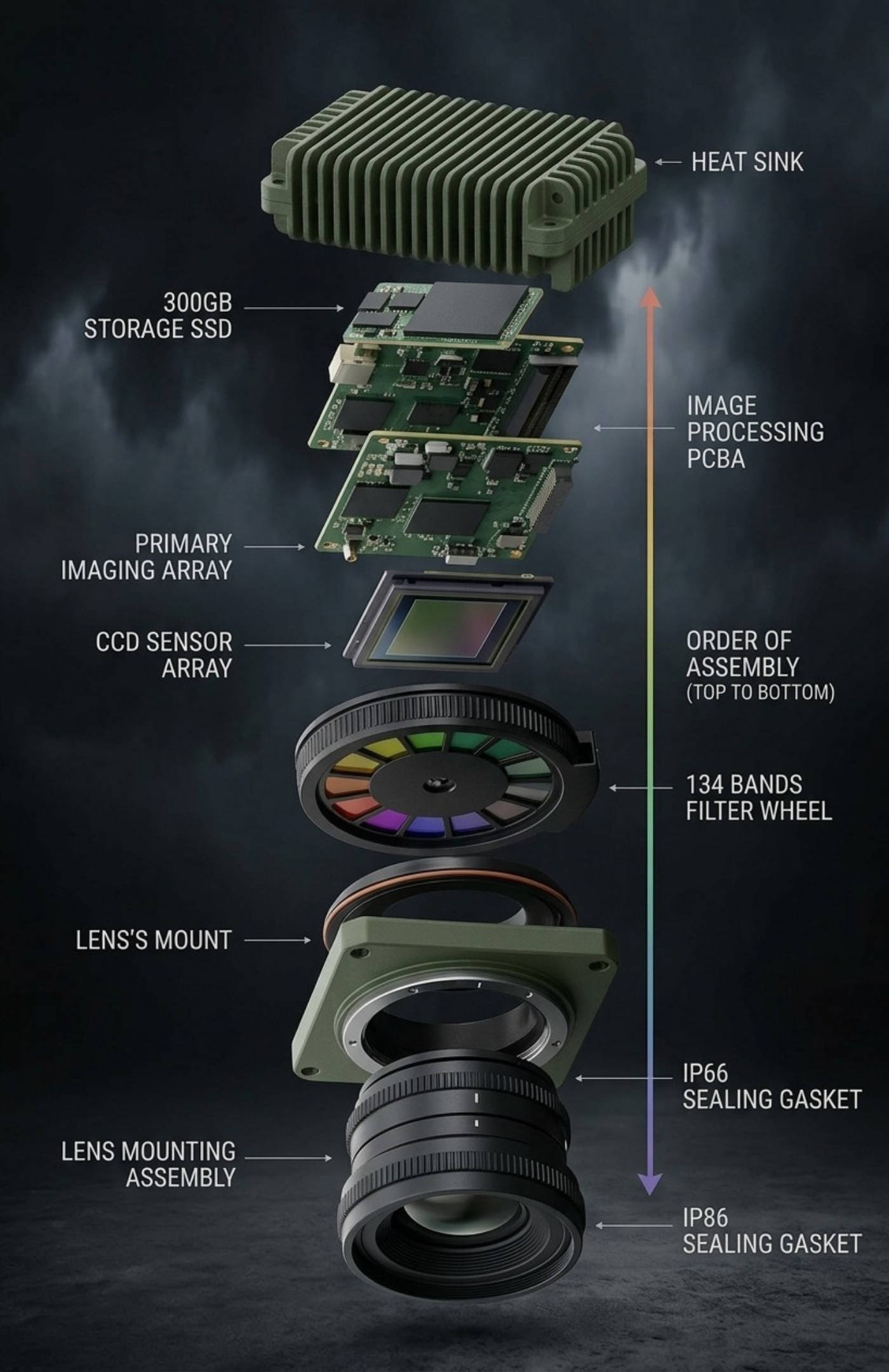
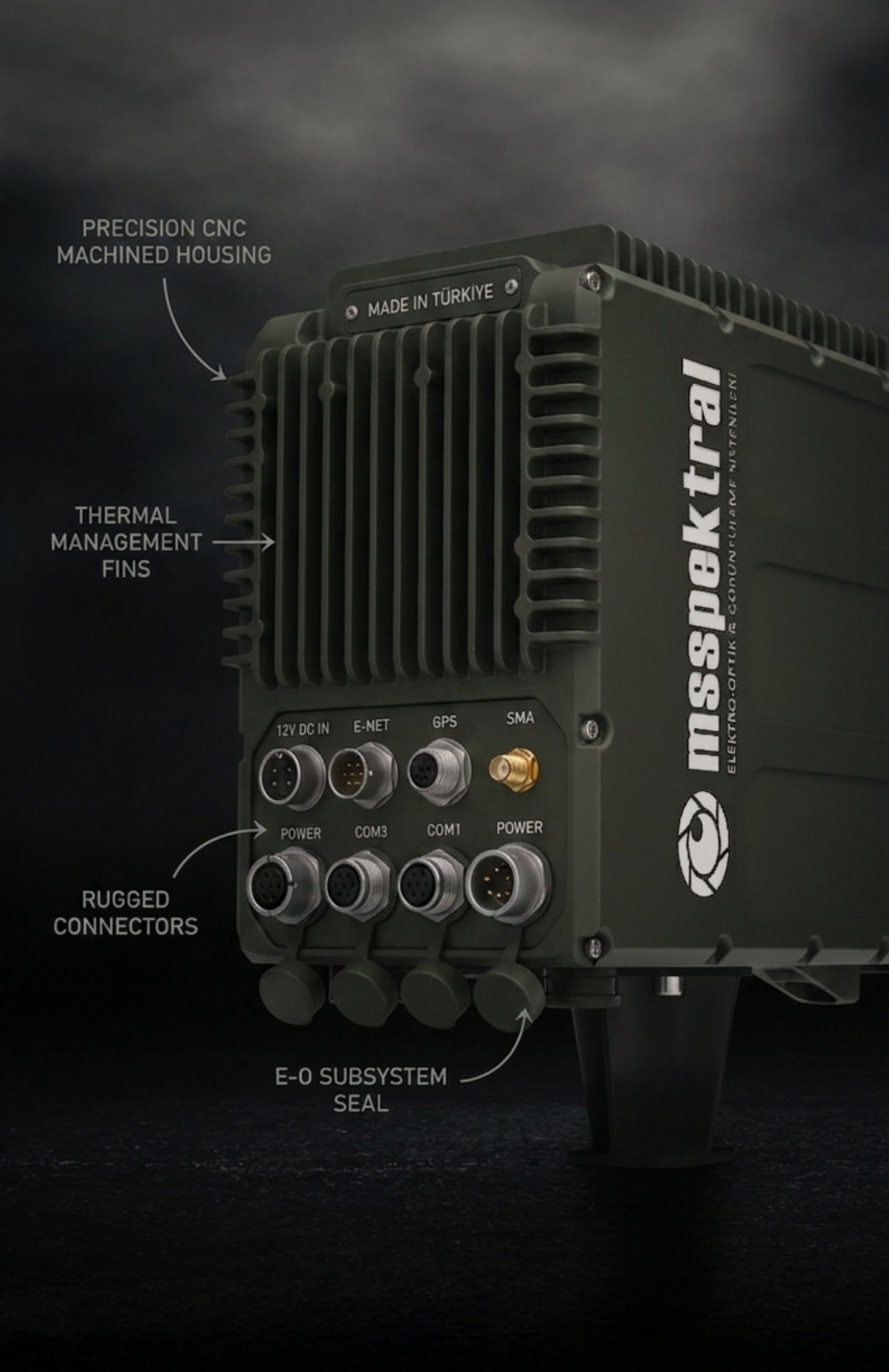
SPECTRA supports both real-time GigE transmission for immediate operator exploitation and up to 300GB of local onboard storage for post-mission analysis. Colour and black-and-white imaging modes are selectable for mission-specific requirements. The system is also compatible with PC software and a rotational stage, making it equally suited to laboratory and industrial spectral analysis applications — from CBRN material identification to industrial quality inspection.
A standard camera produces a three-channel image — red, green, blue. SPECTRA produces 134 channels simultaneously, each capturing a narrow slice of the spectrum. The result is a three-dimensional hyperspectral data cube: two spatial dimensions plus one spectral. Every pixel contains a full spectral signature — the material identity of the surface that reflected the light. Camouflage engineered to defeat NIR cameras is transparent to 134-band hyperspectral imaging.
The operational difference between a standard camera and SPECTRA is not one of image quality — it is one of information content. More bands means more dimensions of material data. The spectral fingerprint that camouflage cannot replicate.
Push-broom hyperspectral imaging is a proven, operationally mature technology. SPECTRA applies it in a ruggedised package designed for the realities of armoured vehicle deployment — not the laboratory bench.
SPECTRA uses a push-broom scanning architecture. As the vehicle moves — or the rotational stage turns — the system captures a full spatial row of the scene at every instant. Light from that row is dispersed across 134 wavelength channels simultaneously by the spectrometer. No spectral gaps, no switching between bands, no data interpolation. At every moment, every point in the scan line has a complete 134-band spectral measurement.
Each push-broom scan line assembles into a three-dimensional hyperspectral data cube — two spatial dimensions (the scene image) plus one spectral dimension (the 134-band signature at each pixel). The result is not simply an image: it is a pixel-level material map of the scene. Every point has an identity — vegetation, soil, synthetic fibre, metal, liquid. Materials that appear identical in colour may have completely distinct spectral fingerprints across 134 bands.
SPECTRA is designed for the realities of vehicle-mounted operation. The GigE interface delivers real-time hyperspectral data to the vehicle operator or a remote command post — enabling immediate exploitation as the vehicle advances. Where data link availability cannot be guaranteed, up to 300GB of local onboard storage captures the complete hyperspectral datacube for post-mission analysis. Both modes operate independently or simultaneously — the mission determines the recording strategy, not the system.
The question is not whether hyperspectral imaging outperforms a standard camera in good conditions — it does in all conditions. The question is whether the intelligence gap is operationally significant. For camouflage defeat and CBRN reconnaissance, it is decisive.
134-band hyperspectral imaging is a specialist capability — operationally decisive when the threat is concealment, camouflage or chemical hazard. SPECTRA is built for armoured vehicle integration and equally suited to controlled laboratory analysis.
Vehicle-mounted hyperspectral scanning of operational areas — detecting camouflage nets, concealed vehicles, foliage-covered positions and synthetic concealment materials that defeat all visible and NIR-band imaging systems.
Standoff spectral detection of chemical, biological and radiological surface contamination signatures. Hyperspectral imaging provides material discrimination at operational range — identifying hazard areas before personnel or platforms are committed.
Integration into the ISR suite of armoured reconnaissance and fighting vehicles — providing hyperspectral ground scan capability during patrol and advance operations, with real-time GigE output to the vehicle crew station.
PC software and rotational stage compatibility make SPECTRA a high-precision spectral analysis instrument for defence research, material verification and CBRN reference library development in controlled environments.
Tell us your platform, target environment and mission requirements — our engineers will advise on SPECTRA integration options and how hyperspectral imaging fits within your broader ISR capability programme.