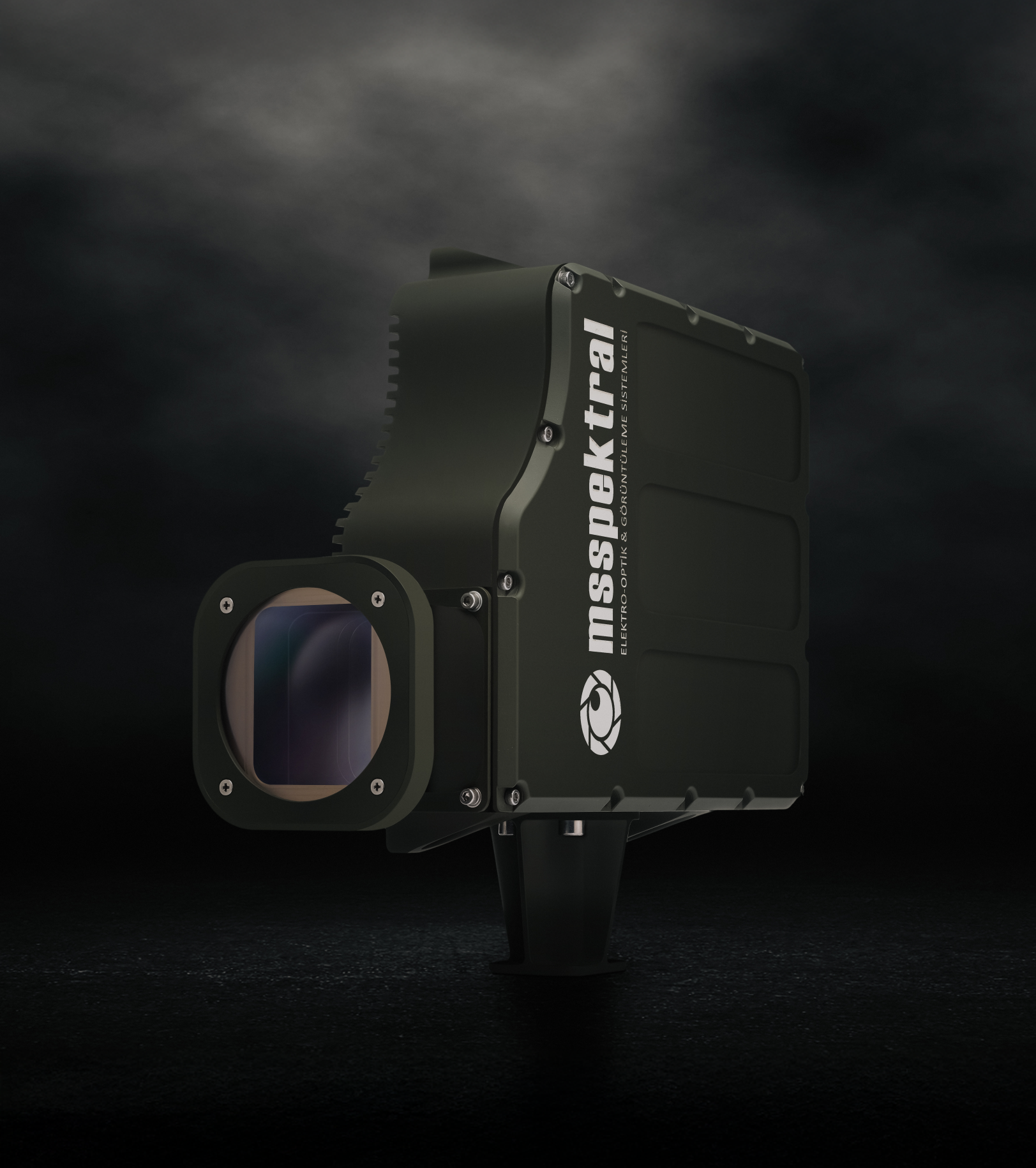
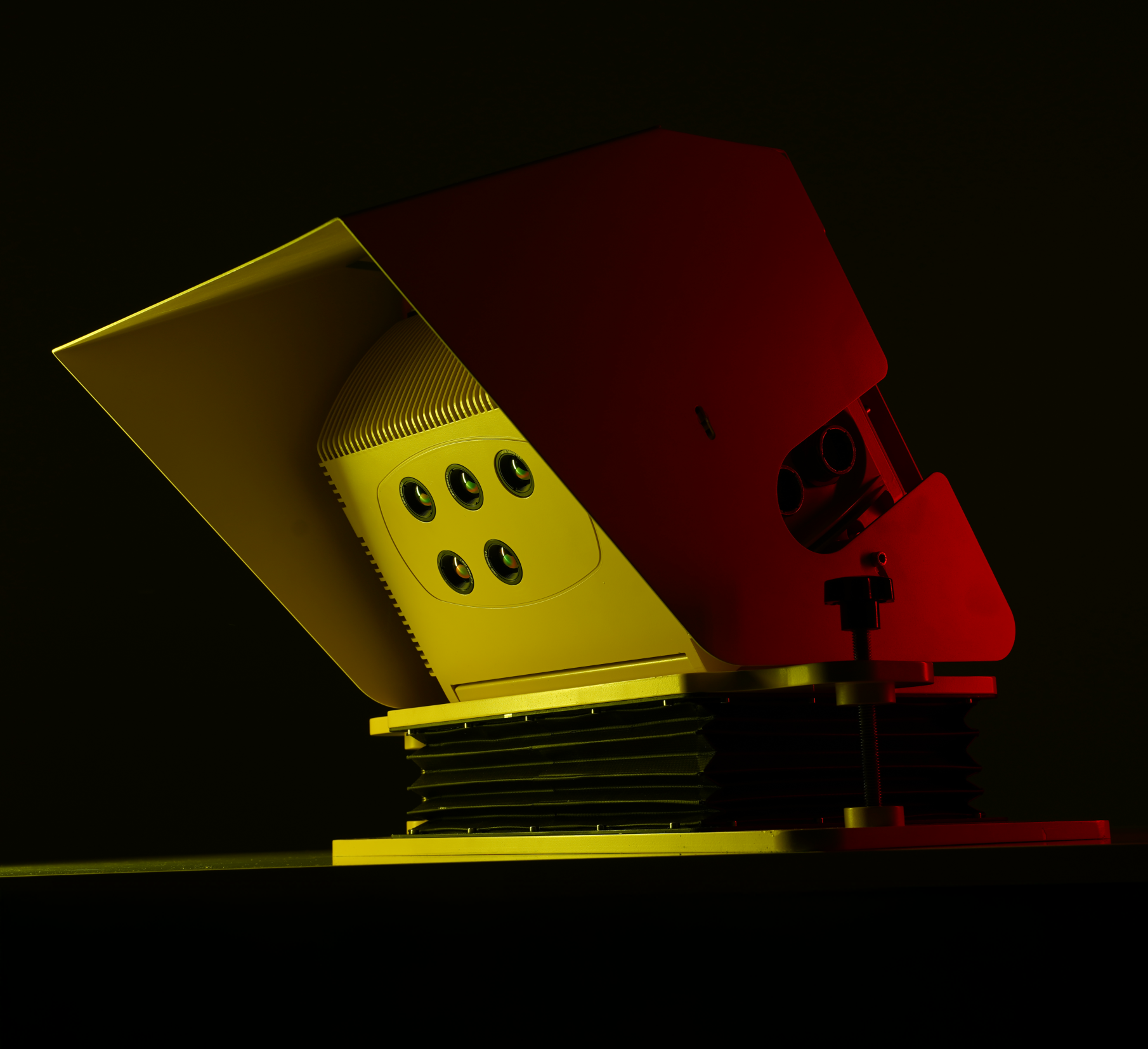
SENTINEL Multi-Sensor Electro-Optic Surveillance System — RGB SWIR LWIR VNIR AI detection for defence perimeter security
Home Defence & Surveillance SENTINEL
Spectra™ Series · 06 of 06

SENTINEL

Multi-Sensor Electro-Optic Surveillance System

"Five imaging channels. One AI platform. Zero blind spots — in any weather, any light."

4+
Imaging Channels
RGB · SWIR · LWIR · VNIR + Gated Laser
AI
Auto-Detection
Classify and track — personnel, vehicle, aircraft
MIL
STD-810G
Environmental qualification
IP66
Rated
Salt spray, dust, water ingress protected
View Technical Specs
Imaging Channel Architecture
RGB
Visible Colour
400–700 nm
High-resolution colour imagery for positive daytime identification — fine detail, true colour, human-readable scene awareness.
SWIR
Short-Wave Infrared
900–1700 nm
Cuts through haze, sea mist, smoke and light fog — delivers contrast and detail at range when visible cameras lose the scene entirely.
LWIR
Thermal Infrared
8–14 µm
Passive thermal detection — personnel and vehicles visible in total darkness from body and engine heat. No illuminator required.
VNIR
Visible + Near-IR
400–1000 nm
Extends low-light sensitivity beyond visible-only cameras — effective at dusk, dawn and under artificial illumination without active IR emission.
GATED
Gated Laser
Active Illumination
Pulsed range-gated illumination — eliminates backscatter in fog and dust that defeats conventional active systems. Sharp imagery through obscurants.
System Overview

SENTINEL is the most capable platform in the Spectra™ Series — a smart multi-sensor camera system that integrates five distinct imaging channels into a single AI-powered surveillance unit. It is engineered for one specific operational problem: maintaining effective target detection and tracking in the conditions where individual sensors fail. Fog defeats visible and NIR cameras. Total darkness defeats SWIR and RGB. Conventional active illumination reveals operator position. Smoke and dust obscure everything. No single-channel system is reliable across all these conditions simultaneously.

SENTINEL resolves this by fusing RGB, SWIR, LWIR, VNIR and gated laser illumination into a unified imaging architecture, managed by an AI detection engine that continuously monitors all channels and alerts operators to detections in real time. The AI engine classifies targets as personnel, vehicles or airborne objects automatically — reducing operator workload across extended surveillance periods and eliminating the alert fatigue that degrades performance when operators monitor multiple static camera feeds manually.

MIL-STD-810G environmental qualification and IP66 ingress protection rating confirm that SENTINEL is designed for the environments in which it will actually operate — not laboratory conditions. Salt spray, dust, humidity, temperature extremes and physical shock are all within the system's qualified envelope. A single unified operator interface manages all five imaging channels, gated laser control and AI alerting from one workstation, with no requirement for specialist multi-channel display infrastructure.

MIL-STD-810G
IP66 Rated
RGB + SWIR + LWIR + VNIR
Gated Laser Illumination
Tomographic Imaging Mode
AI Auto-Detection
AI Classification
AI Tracking
Single Unified Interface
ISO 9001:2015
5channels
Imaging Channels
AIengine
Auto-Detect & Track
MIL-810G
Environmental Qual.
IP66
Ingress Protection
24/7
All-Condition Operation

Why a Single Channel Is Never Enough

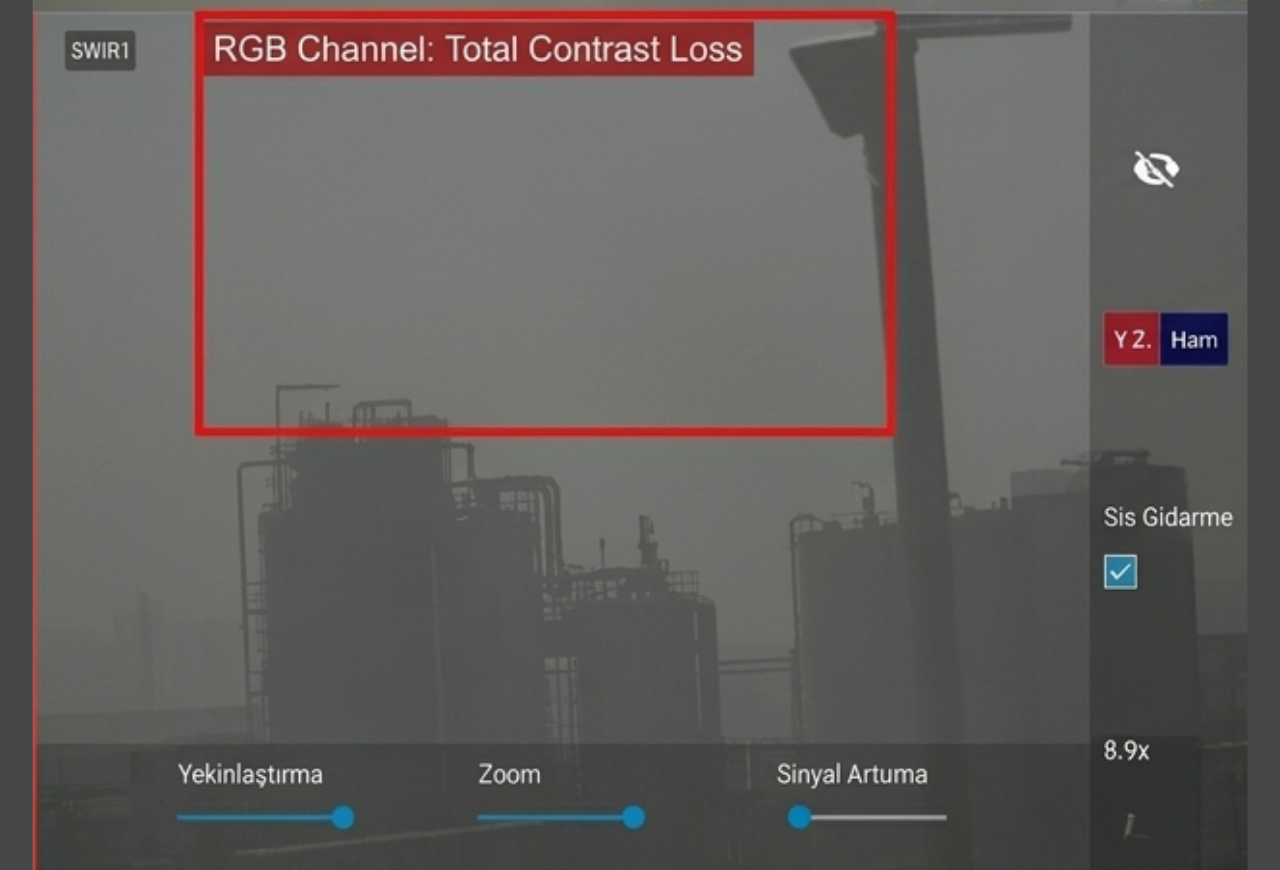
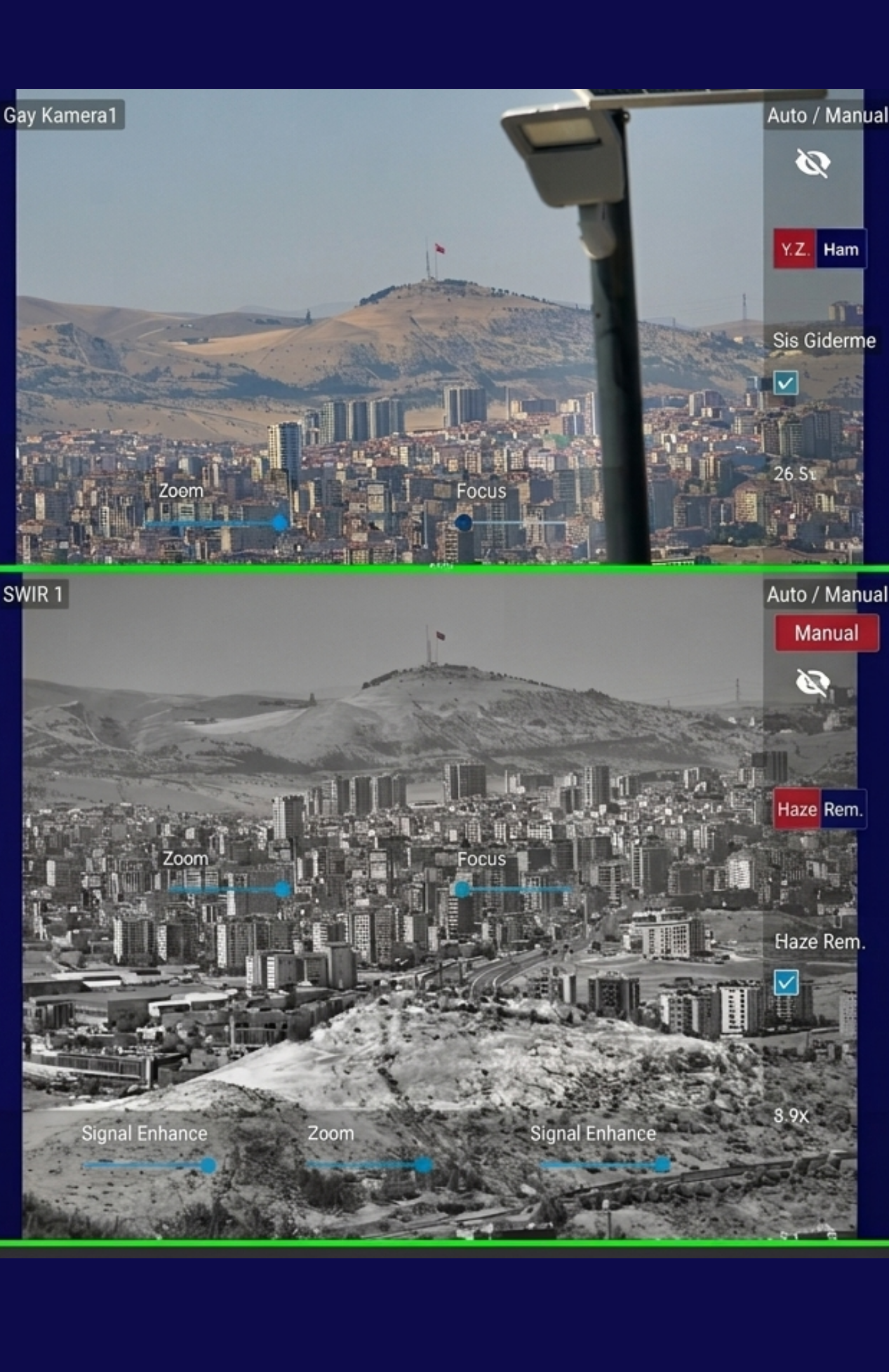
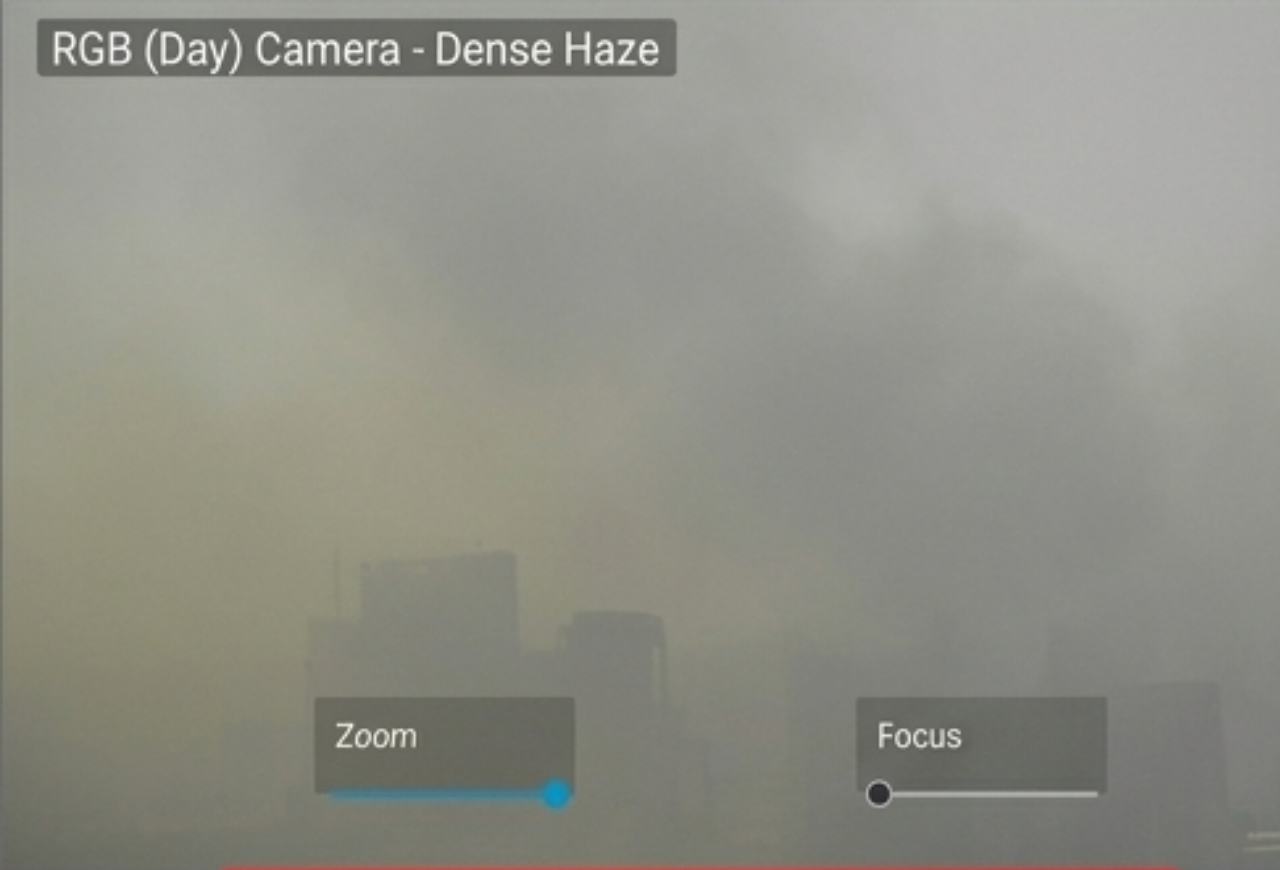
The same scene, imaged simultaneously by RGB and SWIR. In haze and poor visibility, the RGB channel loses contrast entirely while the SWIR channel maintains full scene detail and target identification. SENTINEL carries both — and four more — so the operator always has a usable image, regardless of conditions.

RGB — Visible Channel
RGB vs SWIR comparison — same scene in haze showing visible channel degradation vs SWIR clarity
RGB (upper half): haze reduces contrast, buildings at range are barely distinguishable. Standard visible cameras lose identification capability in these conditions.
SWIR — Short-Wave Infrared
SWIR haze penetration — same scene with full contrast and detail at range
SWIR (lower half): the same scene at the same moment — full contrast, building detail at range clearly resolved. SENTINEL maintains this performance automatically when the RGB channel degrades.

Engineering Data

Download Datasheet (PDF)
Channel
Specification & Operational Role
RGB
Visible colour — 400–700 nm · High-resolution daytime identification imageryVisible
SWIR
Short-wave infrared — 900–1700 nm · Haze, smoke and fog penetration at standoff rangeSWIR
LWIR
Long-wave thermal — 8–14 µm · Total darkness passive thermal detectionLWIR
VNIR
Visible + near-infrared — 400–1000 nm · Low-light dusk, dawn and artificial illumination performanceVNIR
Gated Laser
Range-gated active illumination — eliminates backscatter in fog and dust; tomographic imaging modeActive
Imaging Modes
Gated imaging and tomographic imaging — additional operational modes beyond standard multi-sensor fusion
Parameter
Specification
Detection Engine
AI-powered automatic target detection — continuously monitors all channels simultaneouslyAI
Classification
Automatic target classification — Personnel · Vehicles · Airborne objects
Tracking
Continuous target tracking through partial occlusion, channel switching and target manoeuvring
Alert Reduction
AI alerting eliminates continuous operator monitoring requirement — alerts generated on detection events only, reducing fatigue across extended surveillance periods
Multi-Channel Processing
AI engine monitors all five channels simultaneously — automatically prioritises the optimal channel for detection in current conditions
Parameter
Specification
MIL Standard
MIL-STD-810G environmental qualification — vibration, shock, temperature, humidity, altitudeMIL-STD-810G
Ingress Protection
IP66 rated — fully protected against dust ingress and high-pressure water jets; salt spray resistantIP66
Temperature Range
Extended operating temperature range — qualified for arctic to desert operating environments
Shock & Vibration
MIL-STD-810G qualified — survives transport, installation shock and operational platform vibration
Construction
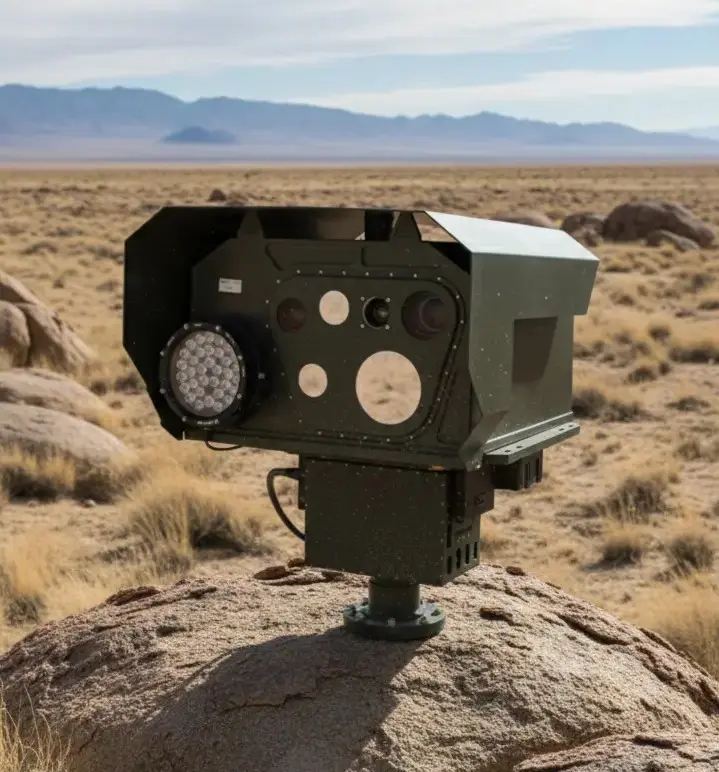
Ruggedised multi-sensor housing — all five imaging channels protected within a single sealed enclosure
Quality Standard
ISO 9001:2015 certified manufacture
Parameter
Specification
Operator Interface
Single unified interface — all five imaging channels, gated laser and AI alerts managed from one operator workstation
Channel Switching
Rapid operator-selectable channel switching — or automatic AI-driven channel prioritisation based on current detection confidence
Alert Interface
AI-generated detection alerts with target classification and channel source — reduces operator monitoring burden across 24-hour surveillance cycles
Integration
Compatible with wider surveillance management infrastructure — video output, data link and alert integration to existing command and control systems
Installation
Fixed perimeter mount, pan-tilt unit or mast installation — compatible with standard surveillance mounting infrastructure
System Operation

How SENTINEL Maintains Awareness
Through Every Condition

Five channels, one AI, one interface. SENTINEL is not simply a camera — it is a sensor fusion platform that eliminates the performance gaps of individual imaging technologies by combining them under intelligent automated management.

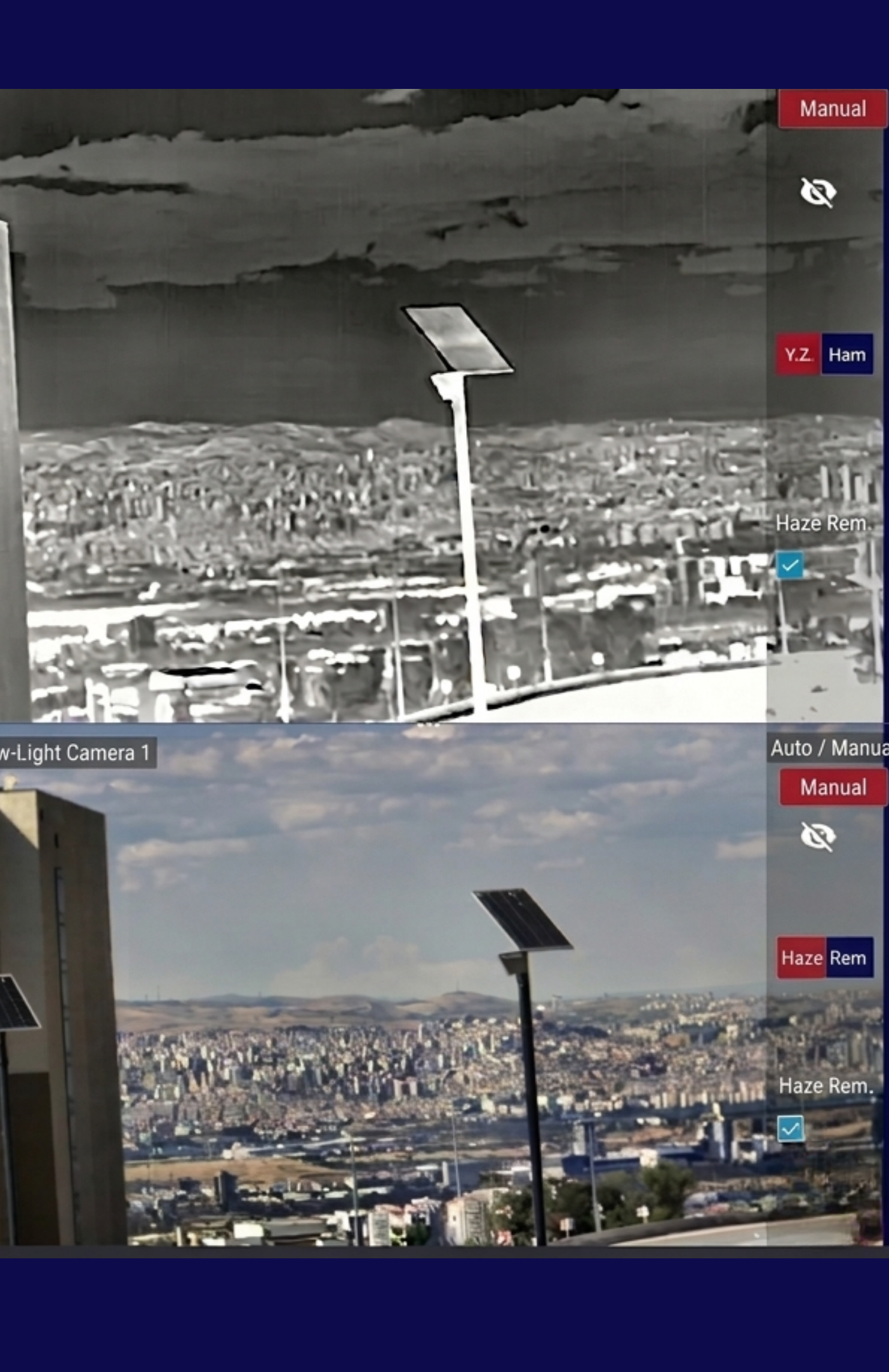
SENTINEL multi-sensor fusion — RGB and SWIR channels showing haze penetration advantage
5Channels Active
AllConditions
Step 01 · Multi-Sensor Fusion

When One Channel
Fails, Four
Remain.

No single imaging technology operates effectively in all conditions. RGB cameras fail in darkness. SWIR cameras lose advantage in clear daytime conditions. LWIR cameras have lower spatial resolution. VNIR cameras are limited in complete darkness without ambient NIR. Gated laser illumination is powerful in fog but requires active emission. SENTINEL operates all five simultaneously — when any channel loses effectiveness, the others compensate, and the AI engine automatically prioritises the channel delivering the highest detection confidence in current conditions.

What Each Channel Contributes
RGB
Positive identification in daylight — colour and fine detail for human identification, vehicle markings, and situational awareness that monochrome channels cannot provide.
SWIR
Haze and fog penetration — maintains contrast at range through coastal mist, morning haze and light smoke when RGB loses the target entirely.
LWIR
Total darkness thermal detection — human body and vehicle engine heat signatures visible at operational range with no illumination of any kind.
RGB + SWIR + LWIR + VNIR simultaneously active — full spectral coverage
No single point of failure — every channel condition covered by at least two others
AI automatically prioritises optimal channel — operator always sees the best available image
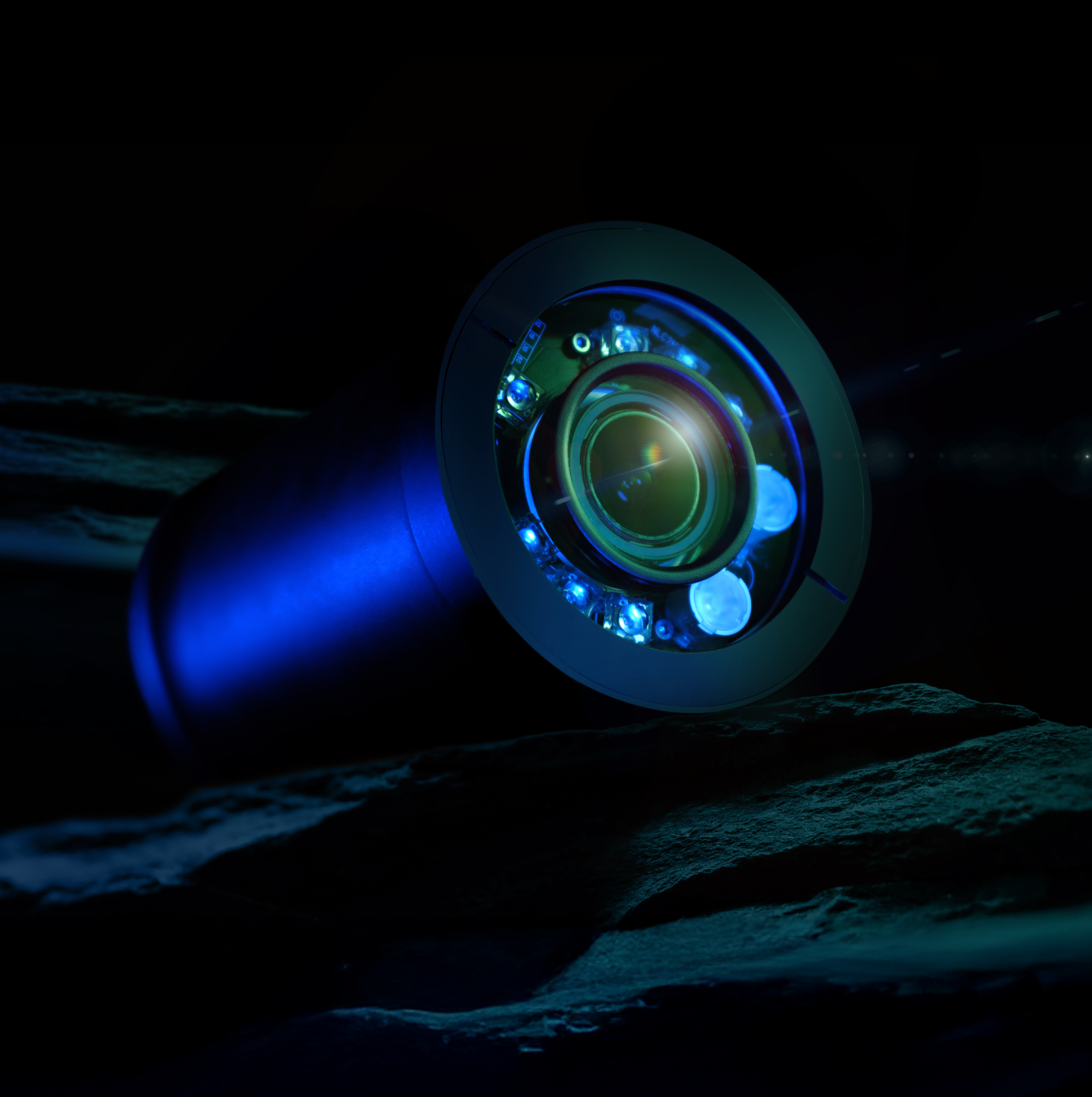
SENTINEL gated laser illumination — range-gated active imaging through fog and obscurants
GatedLaser
Tomo-graphic Mode
Step 02 · Gated & Tomographic Imaging

Through Fog.
Through Dust.
Gated Laser Cuts Through.

Conventional active illuminators flood the scene with light — but in fog and dust, that light is scattered back to the camera by the obscurant particles before it reaches the target, creating a white-out effect that renders the image useless. SENTINEL's gated laser illumination works differently: the laser pulses at precisely timed intervals, and the camera sensor only opens its gate during the brief window when light reflected from the target — not the obscurant particles — is returning. The result is sharp imagery through conditions that defeat every other active imaging approach.

Tomographic Imaging Mode
01
By varying the gate timing across multiple pulses, SENTINEL can build up a three-dimensional range profile of the scene — separating targets at different distances within the obscurant layer.
02
Tomographic imaging is particularly effective for maritime operations — identifying vessels concealed within sea fog layers at ranges where passive channels are ineffective.
Range-gated illumination — eliminates backscatter from fog and dust
Tomographic mode — 3D range profiling through obscurant layers
Maritime fog penetration — vessel identification at range in sea mist
MS Spektral engineering facility — SENTINEL AI development and manufacturing since 2014
AIAuto-Detect
Since2014
Step 03 · AI Detection Engine

Detect. Classify.
Track. Alert.
Automatically.

A single operator cannot continuously monitor five imaging channels across multiple camera installations over a 24-hour surveillance cycle without performance degradation. SENTINEL's AI detection engine resolves this constraint entirely. The engine monitors all five channels simultaneously, detects targets against background across all wavebands, classifies them by type — personnel, vehicle, aircraft — and generates alerts to the operator workstation in real time. The operator responds to events rather than watching for them.

MIL-STD-810G · IP66 — Built for the Field
01
MIL-STD-810G qualification covers vibration, mechanical shock, temperature extremes, humidity, salt fog and altitude — every condition SENTINEL will encounter in UK and international field deployments.
02
IP66 ingress protection provides complete dust sealing and protection against high-pressure water jets in all directions — ensuring sustained operation in maritime, coastal and exposed land environments.
03
Single unified operator interface — one workstation manages all five channels, gated laser control, AI alert configuration and target tracking logs, with no need for multi-screen specialist display infrastructure.
AI auto-detection — personnel, vehicles and aircraft across all five channels
MIL-STD-810G and IP66 — qualified for the harshest operational environments
Single operator interface — five channels managed from one workstation
Request a Capability Briefing
What the AI Engine Does — and Why It Matters

Automatic detection and tracking across five imaging channels changes the economics and effectiveness of persistent surveillance. SENTINEL does not replace the operator — it ensures the operator's attention is focused on real events, not continuous screen monitoring.

01 — DETECT
Automatic Target Detection
The AI engine continuously analyses incoming imagery across all five channels — identifying movement, thermal signatures and spectral anomalies that indicate the presence of a target in the scene. Detection occurs across the full field of view simultaneously, not just within a manually-directed area of interest.
All Channels Full FoV 24/7
02 — CLASSIFY
Target Classification
Detected objects are automatically classified by type — distinguishing personnel from vehicles from airborne objects. Classification uses spectral, thermal and morphological characteristics across available channels, improving accuracy in conditions where single-channel systems produce false positives from animals, debris or environmental movement.
Personnel Vehicles Aircraft
03 — TRACK
Continuous Tracking
Once a target is detected and classified, SENTINEL's AI maintains a continuous track — following the target through the field of view, through partial occlusion by terrain or vegetation, and through automatic channel switching when primary channel performance degrades. Track continuity is maintained even when no single channel provides a clean image.
Through Occlusion Channel Switching Multi-Target

SENTINEL vs. Single-Channel Surveillance — Why Channel Diversity Is the Critical Differentiator

Single-channel surveillance systems are optimised for one set of conditions. Operational environments do not remain constant. The result is predictable gaps in coverage — and adversaries learn to exploit them. SENTINEL eliminates those gaps.

SENTINEL — 5-Channel AI Surveillance
  • Total darkness operation — LWIR thermal detection, no illuminator required
  • Fog, haze and mist — SWIR and gated laser maintain detection at range
  • Smoke and dust — gated laser eliminates backscatter that defeats conventional systems
  • Daytime identification — RGB colour and VNIR for positive target identification
  • AI auto-detection — eliminates operator fatigue across extended surveillance cycles
  • AI classification — distinguishes personnel, vehicles and aircraft automatically
  • MIL-STD-810G and IP66 — qualified for the most demanding environments
  • Single interface — five channels and AI managed from one operator workstation
Single-Channel EO System
  • Lower procurement cost for a single sensor
  • Fails in conditions outside its waveband — no redundancy
  • Night or darkness: visible/NIR cameras require active illumination — position revealed
  • Fog and haze: visible cameras lose contrast at range — target lost
  • No AI detection — operator must monitor continuously for event duration
  • Alert fatigue across extended surveillance periods — missed detections increase
  • Single point of failure — adverse conditions create surveillance gaps exploitable by adversaries
  • Multiple separate systems required to achieve equivalent all-condition coverage

Where SENTINEL Operates

SENTINEL is deployed wherever persistent, all-condition surveillance is required with minimal operator dependency — and where individual sensor technologies would leave predictable gaps in coverage that adversaries can identify and exploit.

Fixed Perimeter Surveillance

Permanent installation on perimeter towers, masts and fixed mounting points — providing 24-hour AI-automated detection across the full perimeter line with alert-driven operator response rather than continuous monitoring.

24/7 AI alertingAll-weather operation

Critical Infrastructure Protection

Energy facilities, government installations, transport hubs and communications infrastructure — where surveillance must be sustained continuously with minimal manpower and zero tolerance for detection gaps caused by adverse weather or darkness.

Persistent autonomous monitoringMinimal operator dependency

Forward Operating Base Security

FOB and patrol base perimeter surveillance — AI-automated monitoring reduces the manpower commitment to watch-keeping duties, allowing commanders to allocate personnel to operational tasks while maintaining full detection coverage.

Reduced watch-keeping burdenCovert passive thermal

Maritime & Coastal Platforms

Vessel-mounted and coastal installation surveillance — SWIR haze penetration and gated laser tomographic imaging maintain target detection in sea fog and adverse maritime conditions where conventional maritime cameras fail. IP66 salt spray protection ensures sustained operation in the marine environment.

Sea fog penetrationIP66 salt spray resistant

Every Condition. Every Threat.
Zero Blind Spots.

Tell us your operational scenario, site type and coverage requirement — our engineers will advise on SENTINEL configuration, mounting options and integration with your existing command and control infrastructure.

Vision ATK Assistant

Hello! Ask me about SENTINEL or any of our defence imaging systems.