"Every bag. Every threat. Every time — without breaking the queue."
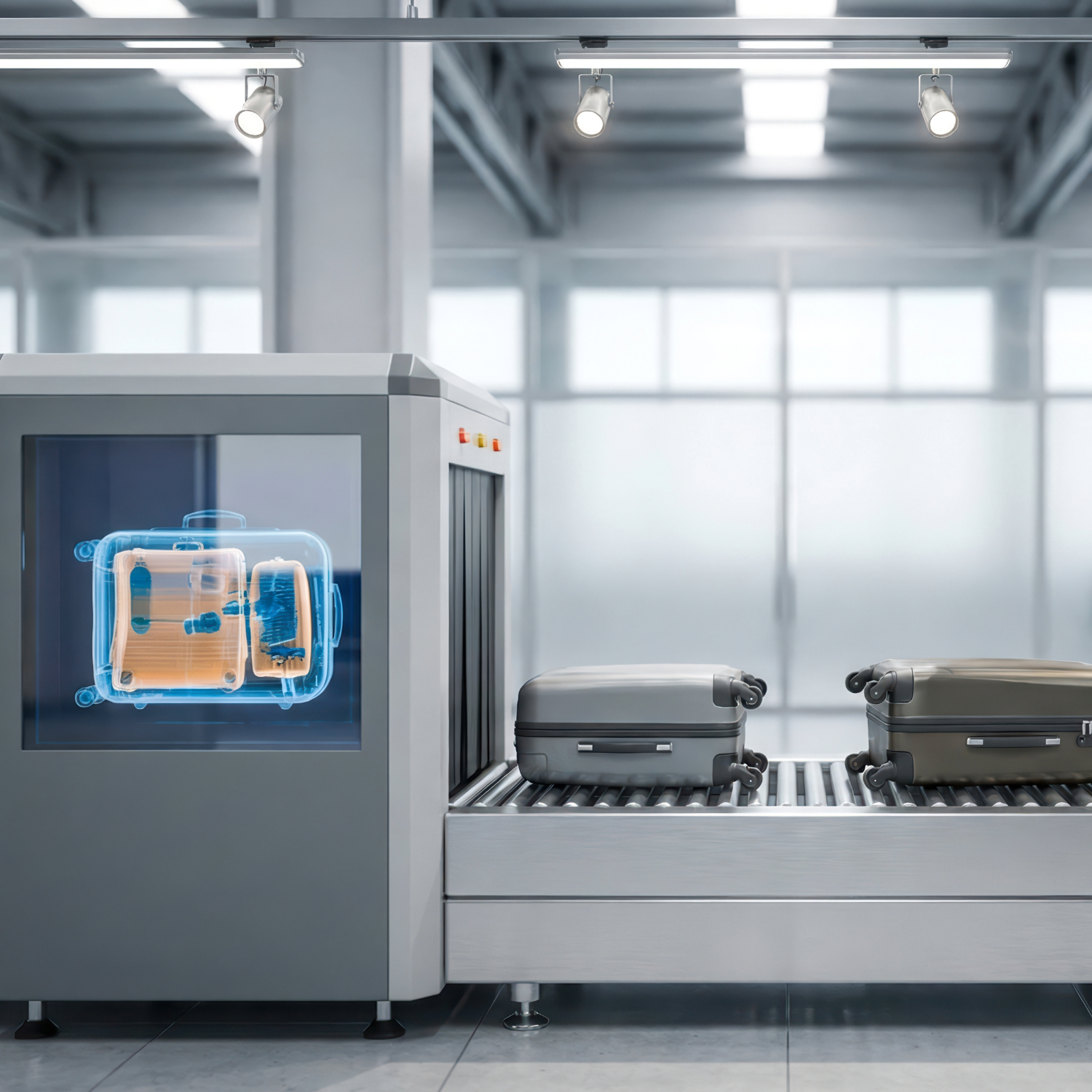
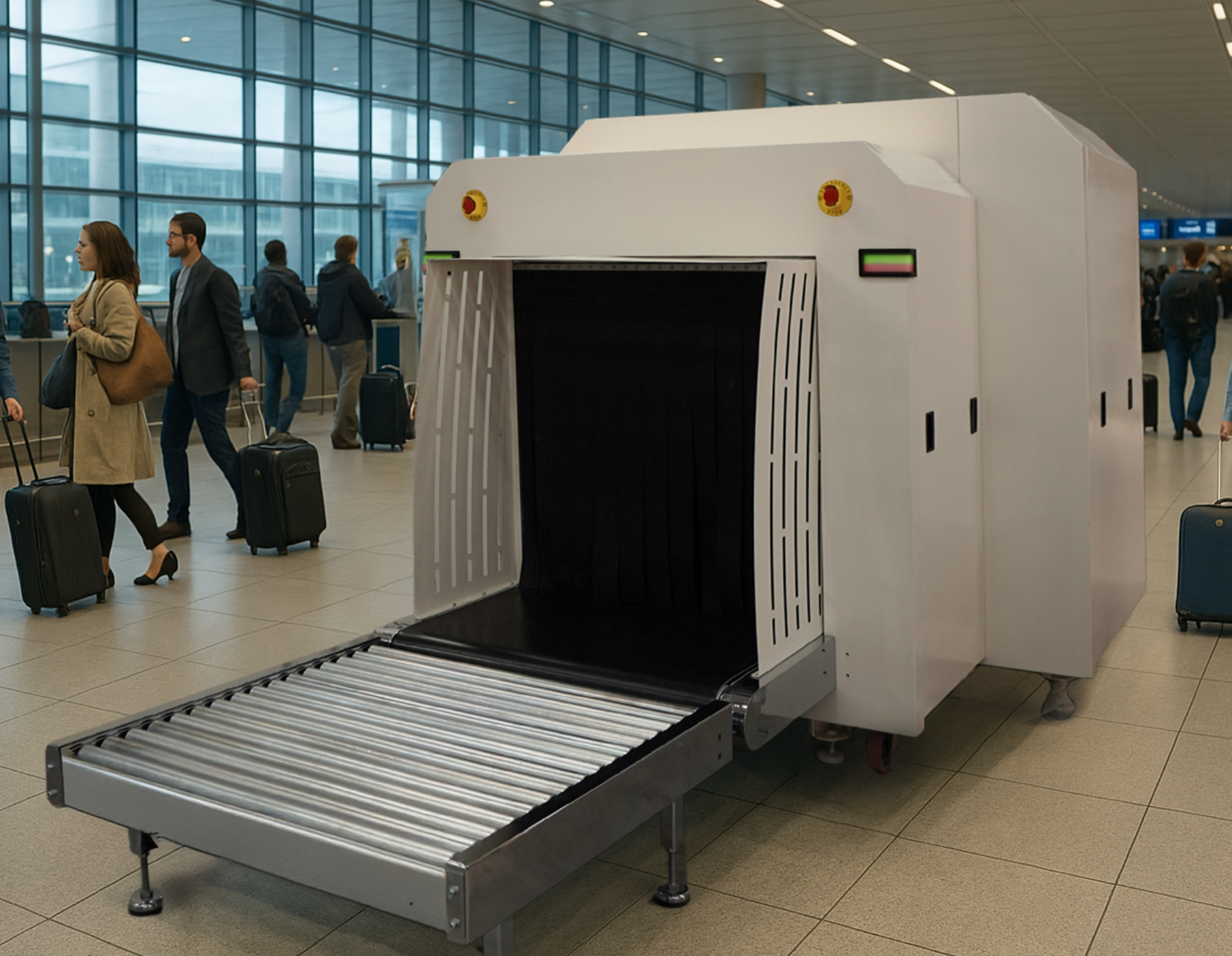
CHECKPOINT X is a dual-energy baggage and parcel X-Ray scanning system with a 100 × 100 cm tunnel aperture — sized to accommodate the largest checked baggage, oversized items and dense cargo that smaller checkpoint scanners cannot process. It automatically classifies the contents of every bag that passes through, based on material characteristics, without manual unpacking or physical inspection.
Bidirectional conveyor scanning, video recording, Threat Image Projection (TIP) operator training and multiple advanced image processing modes combine to deliver consistent, high-performance inspection at high-throughput checkpoints — airports, rail terminals, government buildings, ports and critical infrastructure — without slowing passenger or freight flow.
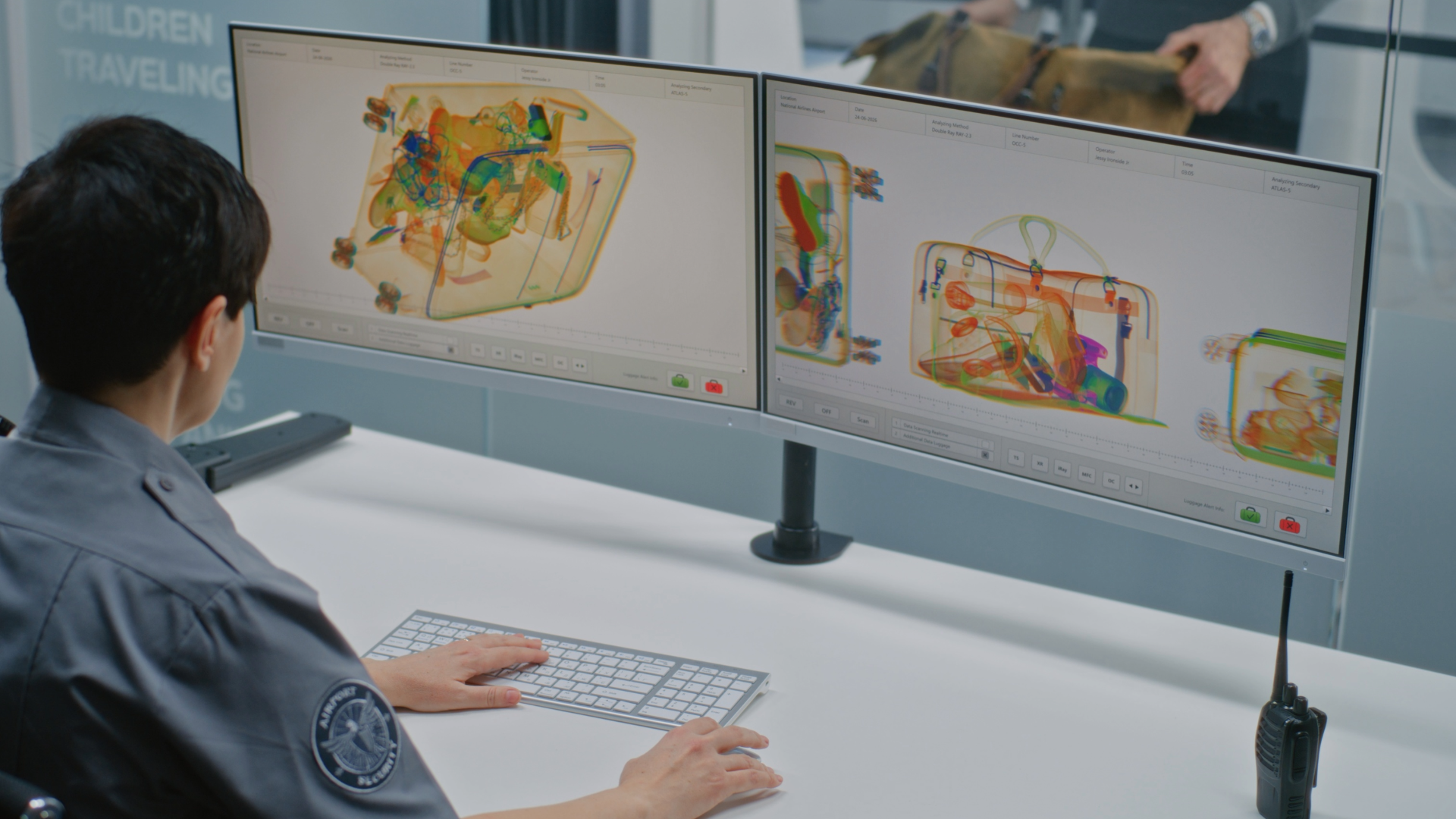
Dual-energy X-Ray automatically colour-codes every item in the bag by material type — organic threats in orange, metallic objects in blue, mixed materials in green. AI-assisted classification flags suspicious items and overlapping objects for operator review in real time.
Place the bag, press start — the system does the rest. Dual-energy imaging, automatic classification and AI-assisted threat flagging in a single pass.
The passenger or officer places the bag on the ergonomic entry conveyor. The 100 × 100 cm tunnel aperture accommodates the largest checked baggage, sports equipment, oversized parcels and heavy cargo items that standard checkpoint scanners cannot process — up to 200 kg on the conveyor at a time.
The infrared sensor detects the bag entering the tunnel and initiates the scan sequence automatically. The conveyor advances at 0.20 m/s — consistent, controlled, never dependent on operator timing.
As the bag passes through, the dual-energy X-Ray source fires two simultaneous energy levels through the full contents. The difference in attenuation between high and low energy reveals the atomic number of every material in the bag — automatically classifying each item by type.
Organic materials render in orange. Metallic and inorganic objects in blue. Mixed materials in green. The colour-coded dual-energy image is generated in real time — the operator sees the complete bag contents, layer by layer, as the scan progresses. If the bag requires a second look, bidirectional conveyor reversal allows an immediate second pass without repositioning.
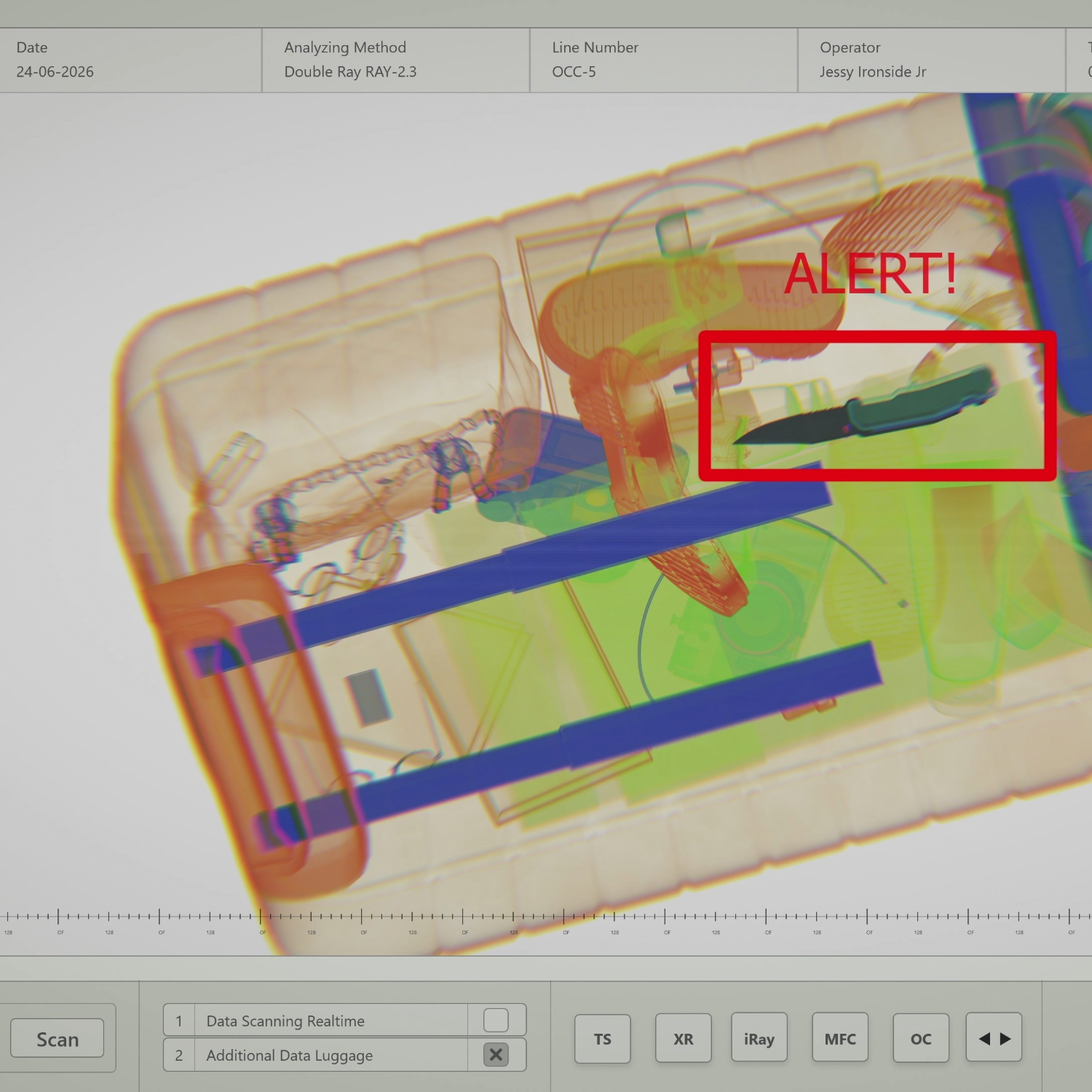
The AI-assisted classification engine analyses the scan in real time — comparing detected shapes, densities and material profiles against known threat signatures. Suspicious items are flagged with an audible and visual alert. The operator can zoom up to ×64, apply edge enhancement, switch high-penetration or low-penetration display modes, or reverse the bag for a second pass — all without removing the bag from the system.
The Threat Image Projection (TIP) system periodically superimposes synthetic threat images into live scan streams during normal operation — training operators to identify weapons, IEDs and contraband without requiring test objects or disrupting the inspection flow. All scans are recorded as video and stored with up to 100,000 images instantly retrievable for audit.
Built for every checkpoint environment where baggage and parcels must be screened without slowing the flow of people or freight.
Checked baggage screening, hold baggage inspection and staff access checkpoints. Large tunnel accommodates all IATA baggage sizes including oversized sports and musical equipment.
High-throughput passenger entry screening at major rail hubs, international train stations and metro entrances — where queue management and inspection speed must be balanced.
Ministerial complexes, parliamentary buildings, embassies and courts — where all bags and parcels entering the facility must be screened to the highest standard for every visitor.
Passenger terminal baggage, hand luggage and crew bag screening at ferry terminals, cruise ports and maritime access checkpoints where throughput requirements are high.
Most checkpoint screening failures are not technology failures — they are operator attention failures. TIP addresses this directly. During normal live operations, the system silently superimposes synthetic X-Ray images of threat objects into the scan stream at randomised intervals.
The operator must identify and respond to the projected threat. Performance is logged and tracked over time. Operators under-performing on specific threat categories receive targeted re-training. The entire process runs during live baggage inspection — no shutdown, no test objects, no false alarms for passengers.
Tell us your throughput requirements, checkpoint environment and compliance obligations — our engineers will confirm the right CHECKPOINT X configuration for your operation.